SWMS vs JSA vs JSEA vs Take 5: What Each One Is For, and Why None of Them Is a Control
A SWMS is the only one of the four that the WHS laws require, and only for high-risk construction work.
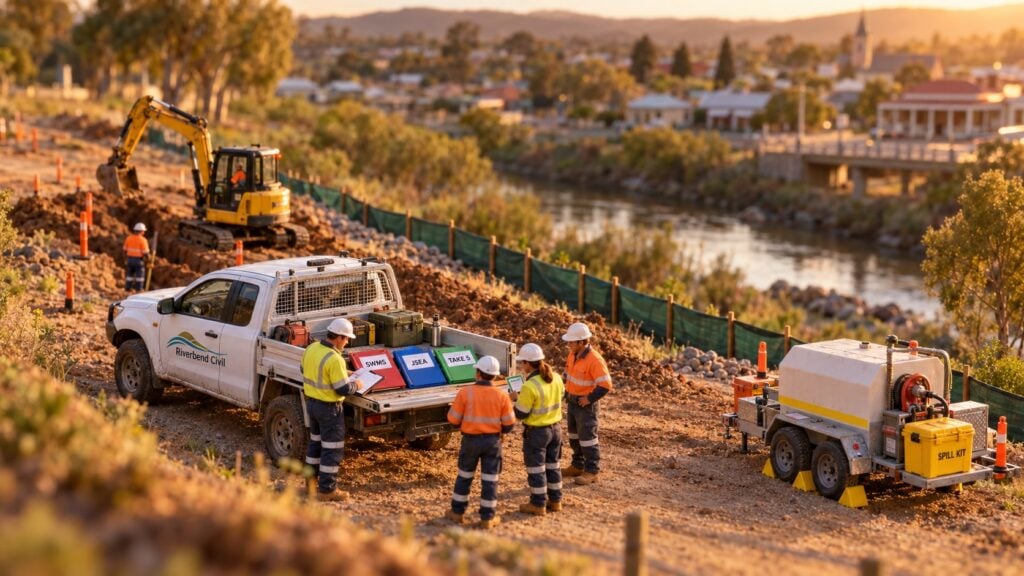
Ask five people on a site what the difference is between a SWMS, a JSA, a JSEA and a Take 5, and you will usually get five answers. In many businesses all four exist, often for the same task, and none of them gets read once it is signed.
They are not the same thing, and they are not interchangeable. Only one is required by law, and only for some work. The others are tools that sit around it. Used well, they form a sensible chain from planning the work to starting it. Used badly, they become four layers of paperwork that look like control and are not.
Short answer
Document
What it is
Legally required?
Who writes it
When
SWMS (safe work method statement)
Sets out the high-risk construction work, its hazards and risks, and how the controls will be implemented, monitored and reviewed
Yes, for high-risk construction work under the WHS laws (and Victoria’s OHS Regulations)
The person conducting the business or undertaking (PCBU), with the workers doing the job
Before the high-risk construction work starts
JSA (job safety analysis), also JHA
Breaks a task into steps, identifies the hazards in each step and the controls
No specific legal requirement; it is one way of doing the risk assessment the law expects
Supervisor and crew
When planning a task that is not covered by a SWMS, or to detail steps beneath one
JSEA (job safety and environmental analysis)
A JSA that also covers the environmental aspects of each step
No specific legal requirement; supports environmental duties and ISO 14001
Supervisor and crew
As for a JSA, where the task can affect the environment
Take 5
A short personal check before starting: stop, look, assess, control, proceed (wording varies)
No
The worker doing the task
At the start of each day, when work recommences after a break or stoppage, and whenever site conditions or the work activity change
The legal requirement sits with the SWMS. Everything else is a tool. And none of them, including the SWMS, controls a risk on its own: the control is the guardrail, the isolation or the bund, not the document that describes it.
The SWMS: the one the law requires
Under the model WHS Regulations, a PCBU must prepare a SWMS, or make sure one is prepared, before high-risk construction work starts. Safe Work Australia lists 19 categories of high-risk construction work, including work where a person could fall more than two metres, demolition of load-bearing elements, work in or near confined spaces, work near energised electrical installations and work involving powered mobile plant. Some jurisdictions vary the list or thresholds, so check your state’s regulations.
A SWMS must identify the high-risk work, specify the hazards and risks, and describe the control measures and how they will be implemented, monitored and reviewed. It has to be kept and available where the work is done, reviewed when the controls change, and followed: if the work is not being done in line with the SWMS, it must stop as soon as it is safe to do so until the SWMS is reviewed.
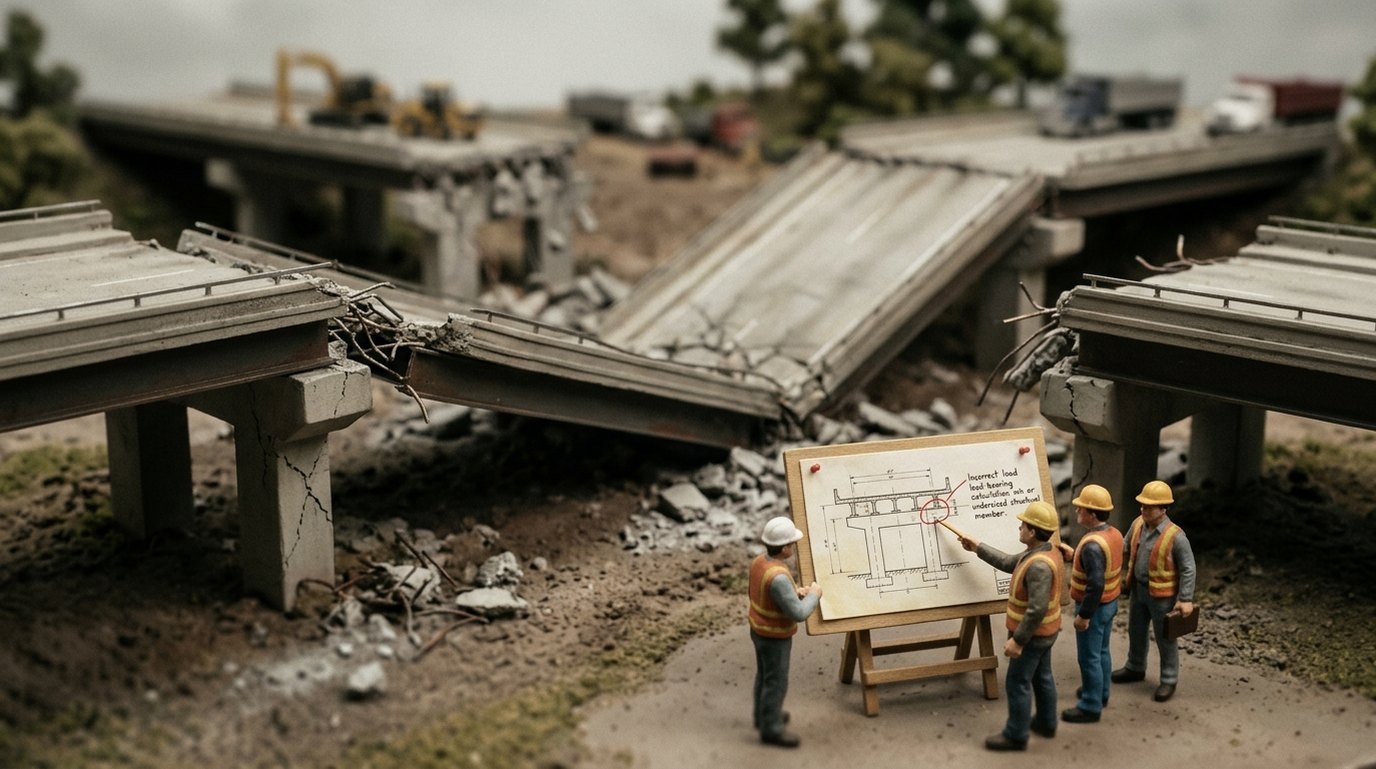
Guidance from regulators such as NT WorkSafe is clear that a SWMS is not a procedure. It is a tool for confirming and monitoring controls, and it should be short and easy to understand. A 40-page SWMS that nobody on the crew has read does not meet the intent.
In Victoria, from 31 March 2027, starting high-risk construction work without a SWMS, or not keeping it readily accessible, will attract an on-the-spot fine. Our article on Victoria’s SWMS on-the-spot fines covers the detail.
The JSA: the task-level risk assessment
A JSA (sometimes called a JHA, job hazard analysis) breaks a task into steps, identifies what could go wrong at each step, and records the controls. No WHS law names it, but it is a practical way to do the risk assessment that the general duty to manage risks expects.
It is most useful in two places:
Work that is not high-risk construction work, where no SWMS is required but the task still carries real risk, such as maintenance, plant changeovers or non-routine work in a warehouse.
Beneath a SWMS, where the SWMS covers the high-risk activity and a JSA breaks a particular task into steps for a specific crew on a specific day.
The common mistake is writing a JSA and a SWMS for the same activity, covering the same hazards, with slightly different controls. When the two disagree, nobody knows which one to follow.
The JSEA: adding the environment
A JSEA is a JSA with the environment built in. For each step of the task, it asks not only “what could hurt someone?” but “what could harm the environment?”
That links the task directly to ISO 14001’s requirement to identify environmental aspects and impacts (clause 6.1.2). An organisation’s aspects register usually lives at the level of activities and sites. The JSEA brings it down to the task in front of the crew:
Task step
Environmental aspect
Potential impact
Control
Refuelling plant on site
Fuel handling
Spill to ground or stormwater
Refuel in a bunded area, spill kit within reach, drip tray under the nozzle
Excavating near a creek
Soil disturbance
Sediment runoff into the waterway
Silt fence installed and checked before work starts, stockpiles away from the bank
Cutting concrete
Slurry and dust
Slurry to stormwater, dust to neighbours
Wet cutting with slurry captured, stormwater pits protected
Clearing a work area
Vegetation removal
Loss of protected vegetation or habitat
Clearing limits marked, no-go zones flagged
Demolition
Waste generation
Mixed waste to landfill, possible contamination
Waste segregated at source, hazardous materials identified first
Done well, the JSEA turns the aspects register from a document reviewed once a year into something used every day. It also gives the crew a clear picture of what an environmental incident looks like on their task, which is usually the first thing missing when one happens.
Putting environmental consequences in the risk matrix
Many risk matrices only describe consequences in safety terms: first aid, medical treatment, lost time, permanent disability, fatality. That leaves crews guessing when they rate an environmental risk on a JSEA. A spill is not a “first aid injury”, so it gets rated low by default.
The fix is to add an environmental column to the consequence criteria, so every rating on a JSEA uses the same scale as the safety risks. An example:
Consequence level
Safety
Environmental
Insignificant
No treatment or first aid
Minor release fully contained on site, no lasting effect
Minor
Medical treatment
Release contained on site, clean-up needed, no off-site effect
Moderate
Lost time injury
Off-site release with short-term, reversible effect; neighbour complaint
Major
Serious injury or permanent impairment
Release causing material harm, likely notifiable to the environmental regulator, licence condition breached
Catastrophic
Fatality
Long-term or widespread environmental harm, prosecution likely
The levels should reflect your own operations, licence conditions and the notification thresholds of the environmental regulator in your state. Our risk matrix template and our article on setting consequence criteria show how to calibrate them. Once the environmental column is in place, the same matrix rates safety and environmental risks on a JSEA, the aspects register and the corporate risk register, which is exactly what an integrated management system is meant to achieve.
The Take 5: the last check before work starts
A Take 5 is a short, personal pre-task check, usually on a pocket card or an app. The steps vary, but they generally amount to: stop, look at the job and the area, assess what could go wrong, put controls in place, then proceed.
Its value is that it catches what has changed since the SWMS or JSEA was written. That makes it most useful at specific moments:
On the day, before the first task starts, because the site is never quite the same as when the plan was written.
When work recommences after a break, a stoppage, a shift change or an incident.
When site conditions change: the weather turns, another crew starts work overhead, ground conditions shift, an access route is blocked.
When the work activity changes: a different method, different plant, a task that was not in the plan, or a step the crew has not done before.
Any of these can introduce hazards that no planning document anticipated: the isolation point is not where the plan said, there is a puddle of fuel under the machine, the exclusion zone now overlaps a footpath. The Take 5 is where those get picked up before someone is exposed to them.
Its weakness is equally well known. A Take 5 that is ticked in the crib room before anyone has looked at the job, or completed in bulk at the end of the week, is not a check at all. If a Take 5 never results in anyone stopping work or raising a hazard, that is worth investigating.
How they fit together
Used as intended, the four tools form a sequence:
The risk assessment and aspects register identify the hazards and environmental aspects of the organisation’s activities.
The SWMS sets out how high-risk construction work will be controlled.
The JSA or JSEA breaks a specific task into steps, for work without a SWMS or to detail work beneath one, including environmental controls.
The Take 5 checks the conditions on the day, and again whenever work recommences or the site or the work changes.
Each one should reference the one before it rather than repeat it. If the Take 5 identifies something the SWMS or JSEA did not cover, that is a trigger to review them, not just to add a note on the card.
Quality has its own version of the SWMS: the inspection and test plan (ITP), which plans the checks, hold points and sign-offs that show the work was built right.
None of them is a control until it is verified
It is one thing to put the controls down on paper, and another to verify they are being followed. A SWMS can be current, signed and in the crib room while the edge protection it describes was taken down two days ago. A JSEA can list a silt fence that was never installed.
That is the job of critical control verification. CCV checks, at the task, whether the controls documented in the SWMS, JSA, JSEA or Take 5 are actually in place and working. Built into routine site inspections, it means every inspection tests the paperwork against what is happening on the ground. Our articles on the guard that was switched off and on workplace fatalities in 2025 explain how to set it up.
Where this sits in ISO 45001 and ISO 14001
What the tools do
ISO 45001
ISO 14001
Identify hazards and environmental aspects of the task
6.1.2 Hazard identification and assessment of risks
6.1.2 Environmental aspects
Choose controls from the top of the hierarchy
8.1.2 Eliminating hazards and reducing OH&S risks
8.1 Operational planning and control
Involve the crew in writing and using them
5.4 Consultation and participation of workers
7.3 Awareness
Keep them current and accessible
7.5 Documented information
7.5 Documented information
Check the controls are in place
9.1 Monitoring, measurement, analysis and performance evaluation
9.1 Monitoring, measurement, analysis and evaluation
Learn when a Take 5 or incident shows a gap
10.2 Incident, nonconformity and corrective action
10.2 Nonconformity and corrective action
For organisations running both standards, one set of task-level tools covering safety and environment, rated on one risk matrix, is far easier to keep alive than two parallel systems. Our article on what HSEQ means covers how the pieces fit in an integrated system.
SWMS, JSA, JSEA and Take 5: FAQs
What is the difference between a JSA and a SWMS?
A SWMS is legally required for high-risk construction work and sets out how the risks of that work will be controlled. A JSA is a task-level risk assessment that is not specifically required by law, used for work without a SWMS or to break a task into steps beneath one.
Do I need a SWMS and a JSA for the same job?
Not if the SWMS already covers the task in enough detail. A JSA is useful when a specific task needs breaking into steps that the SWMS does not cover. Two documents covering the same hazards with different controls create confusion.
What does the E in JSEA stand for?
Environmental. A JSEA is a job safety and environmental analysis, which identifies the environmental aspects and impacts of each task step alongside the safety hazards.
Is a Take 5 a legal requirement?
No. It is a common workplace tool for checking conditions at the start of the day, when work recommences and when the site or the work changes. It supports the duty to manage risks, but no WHS law requires it by name.
Can a SWMS be electronic?
Yes, as long as it is readily accessible to the people doing the work, health and safety representatives and inspectors where the work is done.
How Streamline can help
Streamline develops, implements and internally audits ISO 45001 and ISO 14001 management systems for Australian organisations, including SWMS, JSEA and Take 5 tools that crews actually use, and risk matrices that rate safety and environmental risks on the same scale. The aim is a system that supports how your business operates and makes certification simple. ISO mentoring supports your own team to build and run them. If you would like to talk it through, get in touch.
Published 24 October 2026 | Facts checked 24 October 2026 | Next review April 2027, or when the model WHS Regulations or construction code of practice change | Jurisdiction: Australia (model WHS laws; Victoria noted) | Edition: ISO 45001:2018, ISO 14001:2026
General guidance only. This article is general information, not legal, financial, safety or compliance advice, and it does not take account of your specific circumstances. Streamline ISO Consultants are ISO management-system consultants, not lawyers or licensed advisers. Standards, laws and regulator guidance change, and details were correct only at the time of writing. Always seek professional advice before acting. See our full Disclaimer.
Stay in the Loop
Get an email when we post an article. Your email address will not be used for marketing, and you can unsubscribe at any time.
Om nom nom... COOKIES! The essential ones keep our site working, and a few others help us see how it is used so we can make it better. Your call: accept the whole batch, keep it to essentials only, or pick your preferences. The full recipe is in our privacy policy.
Cookie Preferences
Manage your cookie preferences below:
Essential cookies enable basic functions and are necessary for the proper function of the website.
Name
Description
Duration
Cookie Preferences
This cookie is used to store the user's cookie consent preferences.
30 days
You can find more information in our Privacy Policy and .