What Is HSEQ? Health, Safety, Environment and Quality in One System
HSEQ stands for health, safety, environment and quality. You see it in job titles (HSEQ manager, HSEQ coordinator), in tender questionnaires and in contractor prequalification forms. In practice it means one thing: managing those four areas through a single system, with one set of processes, one risk approach and one audit program, rather than three separate manuals that never talk to each other.
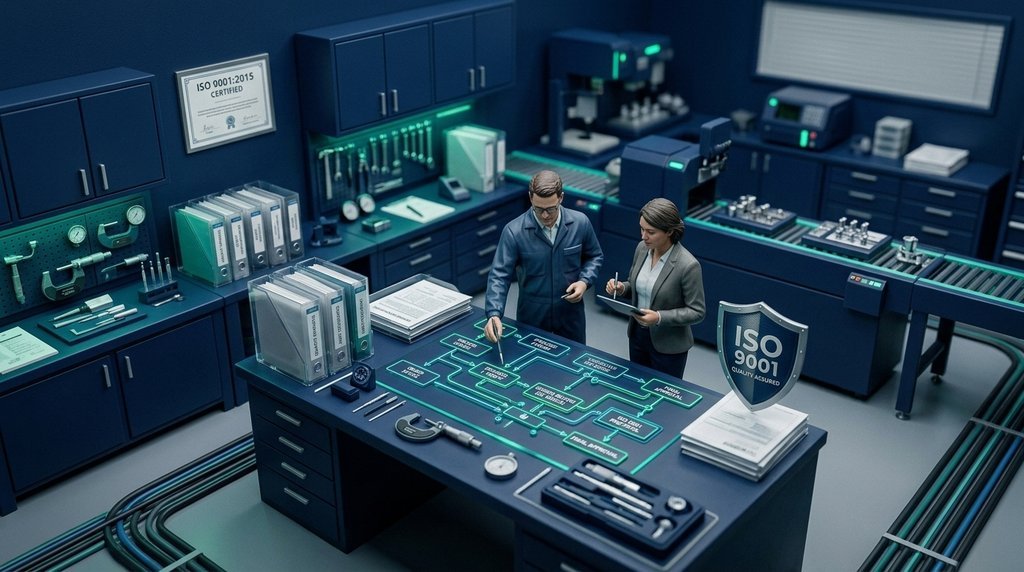
An HSEQ system is one set of processes covering safety, the environment and quality, rather than three separate manuals.
Short answer
An HSEQ system is an integrated management system covering work health and safety, environmental management and quality. In Australia it usually lines up with three ISO standards: ISO 45001 for health and safety, ISO 14001 for environment and ISO 9001 for quality. Because all three share the same clause structure, most of the system (context, leadership, risk, documents, training, internal audit, management review and corrective action) is built once and used for all three. What stays specific is the hazards, environmental aspects and customer requirements each standard deals with.
HSEQ, QHSE, SHEQ, HSE: are they different?
Mostly no. The letters are the same four areas in a different order, and the order usually reflects what the organisation cares about most.
Acronym
Usually means
Common in
HSEQ
Health, safety, environment, quality
Construction, engineering, utilities
QHSE
Quality, health, safety, environment
Manufacturing, services
SHEQ
Safety, health, environment, quality
Mining, resources
HSE
Health, safety, environment (no quality)
Oil and gas, heavy industry
HSSE
Health, safety, security, environment
Energy, government
If a tender asks for an “HSEQ management system”, it is almost always asking whether you manage safety, environment and quality in a structured, documented way, and whether you can show records that prove it.
Context and scope. One description of what the business does, where, and who has an interest in it.
Leadership and policy. One HSEQ policy rather than three, with commitments for each area.
Risk and opportunity. One method for assessing risk, applied to hazards, aspects and quality risks.
Legal and other requirements. One register covering WHS laws, environmental licences and customer contracts.
Documents and records. One document control process.
Competence and training. One training matrix.
Supplier and contractor control. ISO 9001 clause 8.4 and ISO 45001 clause 8.1.4 cover the same ground, with safety added to the second. See our guide to supplier and contractor control.
Internal audit, management review and corrective action. One audit program and one review meeting covering all three.
In a small or mid-sized business the HSEQ manager is often one person wearing three hats. A typical week includes:
running or reviewing risk assessments and SWMS for new work
site safety inspections and follow-up of corrective actions
incident reporting and investigation
keeping the legal register and environmental obligations current
supplier and subcontractor prequalification
internal audits and preparing for certification body audits
reporting HSEQ performance to management
The role is broad, and that is the main risk: one person can become the system. If the HSEQ manager leaves and nobody else can run an inspection, close a corrective action or explain the risk register, the system was never really embedded. A good HSEQ system spreads ownership to supervisors and line managers, with the HSEQ manager coordinating rather than doing everything.
Why businesses build an HSEQ system
To win work. Tier 1 contractors, government buyers and utilities increasingly ask for certified HSEQ systems at prequalification. A combined certificate covering ISO 45001, 14001 and 9001 answers that question in one line.
To meet legal duties. Australian WHS laws require a person conducting a business or undertaking to manage risks so far as is reasonably practicable. A safety management system does not replace that duty, but it gives you a structured way to show you have met it. The same applies to environmental licence conditions.
To cut duplication. Three separate systems mean three sets of procedures, three audit programs and three management reviews. Integrated, the same work is done once.
To lower audit costs. Certification bodies can reduce total audit time for a genuinely integrated system, which is where much of the saving comes from.
Where HSEQ systems go wrong
Three manuals stapled together. Calling it HSEQ does not make it integrated. If the safety, environment and quality procedures still contradict each other, the system is not working as one.
Paper controls. The risk register lists controls nobody checks. We recommend building critical control verification into site safety inspections, so every inspection tests the plan and what is happening on the ground. Our article on workplace fatalities in 2025 explains how.
Quality treated as an afterthought. In construction and engineering, safety tends to dominate, and quality is reduced to an inspection and test plan. ISO 9001 asks for more: customer requirements, supplier control and learning from nonconformances.
Too much documentation. If the system says weekly toolbox minutes are required, an auditor will check them. Write down what you actually need and actually do, and nothing more.
How to get started
Decide the scope. Which sites, activities and standards. Many businesses start with ISO 45001 and ISO 9001 and add ISO 14001 later.
Run a gap analysis against all three standards at once, so the shared clauses are assessed once. See our gap analysis audits.
Build the shared core first: policy, risk method, legal register, document control, training and internal audit.
Add the specific parts for each standard: hazard controls, environmental aspects, customer and supplier processes.
Audit and review, then book a combined certification audit.
Health, safety, environment and quality. It describes managing all four through one integrated system.
Is there an HSEQ standard?
No single standard is called HSEQ. An HSEQ system is usually certified against three standards together: ISO 45001, ISO 14001 and ISO 9001, often in one combined audit.
Is HSEQ the same as an integrated management system?
Broadly, yes. HSEQ is the industry name; integrated management system is the term the ISO standards use. An integrated system can also include others, such as ISO 27001 for information security.
Do small businesses need an HSEQ system?
Not by law, but every business has WHS duties, and many clients now ask for a documented system before they will engage you. A small business can run a simple, integrated system without a dedicated HSEQ manager.
Can we certify to one standard first and add the others later?
Yes. Because the standards share a structure, adding the second and third is far less work than the first.
How Streamline can help
Streamline builds and audits integrated HSEQ systems for Australian businesses, covering ISO 45001, ISO 14001 and ISO 9001. You deal directly with an experienced ISO Lead Auditor. If you have capable people in-house, ISO mentoring helps them build the system themselves. If you would like a hand, get in touch.
Published 17 October 2026 | Facts checked 17 October 2026 | Next review April 2027, or when the ISO 9001 or ISO 45001 revisions publish | Jurisdiction: Australia | Edition: ISO 45001:2018, ISO 14001:2015 and ISO 9001
General guidance only. This article is general information, not legal, financial, safety or compliance advice, and it does not take account of your specific circumstances. Streamline ISO Consultants are ISO management-system consultants, not lawyers or licensed advisers. Standards, laws and regulator guidance change, and details were correct only at the time of writing. Always seek professional advice before acting. See our full Disclaimer.
Stay in the Loop
Get an email when we post an article. Your email address will not be used for marketing, and you can unsubscribe at any time.
Om nom nom... COOKIES! The essential ones keep our site working, and a few others help us see how it is used so we can make it better. Your call: accept the whole batch, keep it to essentials only, or pick your preferences. The full recipe is in our privacy policy.
Cookie Preferences
Manage your cookie preferences below:
Essential cookies enable basic functions and are necessary for the proper function of the website.
Name
Description
Duration
Cookie Preferences
This cookie is used to store the user's cookie consent preferences.
30 days
You can find more information in our Privacy Policy and .