From 31 March 2027, a Missing SWMS Is an On-the-Spot Fine in Victoria
From 31 March 2027, starting high-risk construction work without a SWMS in Victoria can attract an on-the-spot fine of up to $1,254.60 for a company.
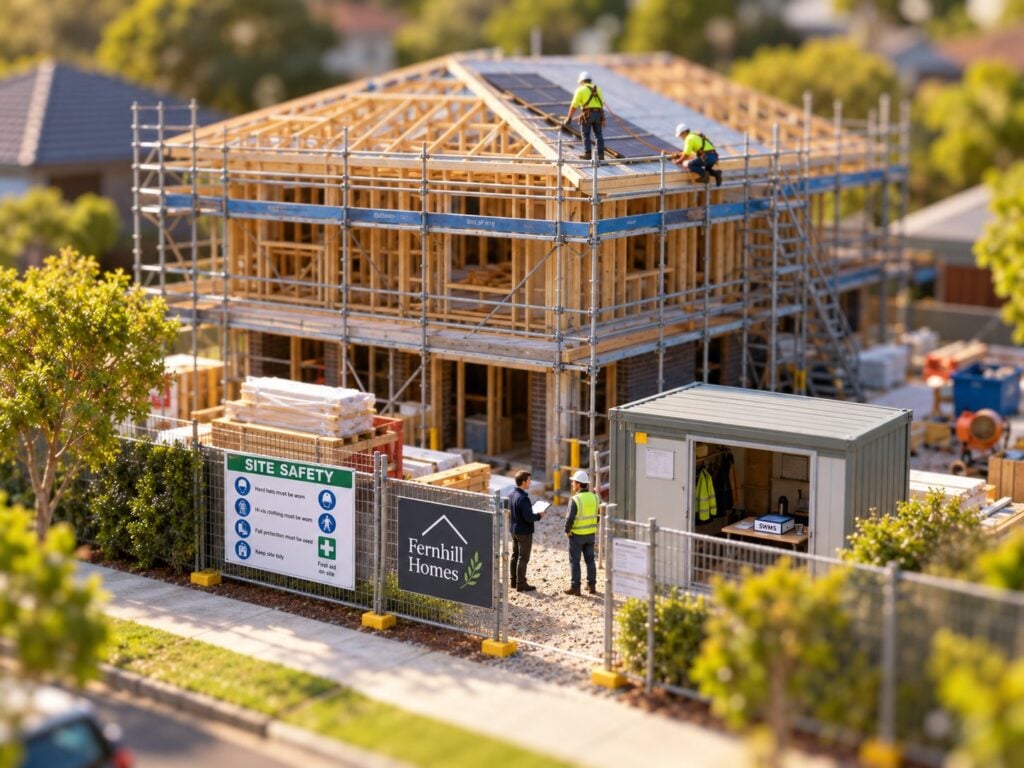
Victoria is giving WorkSafe inspectors a faster way to deal with some of the most common safety breaches on building sites. From 31 March 2027, an inspector who finds high-risk construction work under way without a safe work method statement (SWMS), or a fall risk with no proper control in place, will be able to issue an on-the-spot fine rather than having to build a case for prosecution.
The rules themselves are not new. The Victorian Government and WorkSafe are clear that the changes create no new safety duties. What changes is how quickly a breach has a consequence, and how easy it is to prove. For most of the new infringement offences, the question an inspector asks is simple: can you show me the document, here, now?
Short answer
The Occupational Health and Safety Amendment (Infringement Offences) Regulations 2026 commence on 31 March 2027. They make five breaches of the existing OHS Regulations 2017 infringement offences:
Regulation
What the breach is
Individual
Company
44A
Failing to use a risk control measure where there is a risk of a fall
$418.20
$2,091
46(1)
Relying only on administrative controls for a fall risk without making the required record
$250.92
$1,254.60
46(3) and 46(3A)
Not keeping that record readily accessible for the duration of the task
$250.92
$1,254.60
327(1)
Starting high-risk construction work without a SWMS
$250.92
$1,254.60
329(1) and 329(2)
Not keeping the SWMS readily accessible for the duration of the work
$250.92
$1,254.60
WorkSafe says these amounts apply until 30 June 2027 and may increase after that. Prosecution remains available: the court maximums are $20,910 for an individual and $104,550 for a company for regulation 44A, and $12,546 and $62,730 for the others.
Why this matters more than the dollar amounts suggest
A $1,254.60 fine is not going to break a building company. But four of the five offences are about a document existing and being findable at the workplace, and that changes how an inspection plays out.
Until now, a missing SWMS was something an inspector would usually deal with through an improvement notice or a prohibition notice, with prosecution reserved for serious cases. From March 2027 the inspector can also issue a fine on the spot, and the evidence is simply that the document was not there. There is no argument to be had about whether the hazard was controlled in practice. Either the SWMS was prepared before the work started and is accessible on site, or it was not.
The Government’s release says 46 duty holders were prosecuted over fall risks in 2025-26, with combined penalties of $6.2 million. On-the-spot fines are designed to deal with breaches earlier and more often, well before they reach that point.
What “readily accessible” means
Regulations 46 and 329 require the record or SWMS to be readily accessible, for the duration of the work, to the people doing the work, health and safety representatives for any affected designated work group, and WorkSafe inspectors.
WorkSafe’s guidance gives practical examples: a printed copy kept in the crib room, or a shared electronic folder with instructions on how to access it. The test is whether the people doing the work, and an inspector who turns up unannounced, can find it without someone driving back to the office.
A SWMS that exists only in the project manager’s inbox, or in a document management system that workers on site cannot open, is likely to fail that test.
The fall risk offence
Regulation 44A is the one with the higher fine, and the one that is not about paperwork. WorkSafe’s guidance says an infringement may be issued where there is a fall risk of two metres or more and the employer has used no control measures under regulation 44, or has relied only on lower-order controls such as a ladder or administrative controls when they are not adequate.
That puts the hierarchy of controls front and centre. Under Victoria’s falls regulations, the expectation is to work on the ground or a solid construction where you can, then use passive fall prevention such as scaffolding and guardrails, then positioning systems, then fall arrest, and only then ladders and administrative controls. Our articles on the elevating work platform code of practice and on South Australia’s two-metre fall threshold cover how other parts of the country are tightening the same area.
Where administrative controls are genuinely the only option, regulation 46 requires a written record of the work and the control used. From March 2027, not having that record, or not having it on site, is itself an infringement offence.
What an internal audit should check before 31 March 2027
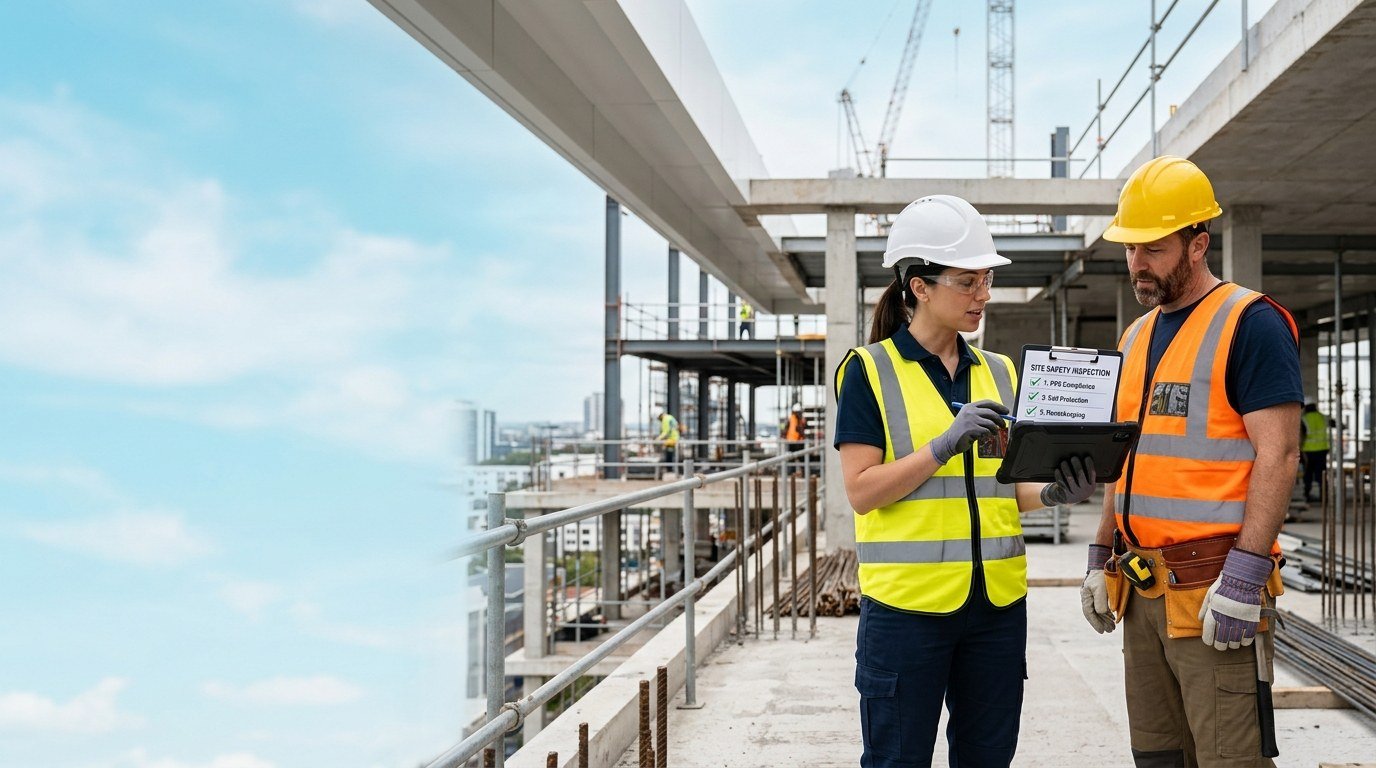
Most of these offences can be found by an internal audit, as long as the audit samples sites rather than the office. A practical checklist:
SWMS before work starts. For each high-risk construction task under way, is there a SWMS, and is it dated before the work began?
On site, not in the office. Can a worker on site show you where the SWMS is kept? Can a subcontractor’s crew access it?
For the whole job. Is the SWMS still accessible at the end of the task, or did it disappear when the supervisor changed?
Fall controls match the hierarchy. Where work is at two metres or more, is the control the highest practicable one? If it is a ladder or administrative control, is there a regulation 46 record explaining why, and is it on site?
Subcontractor SWMS reviewed. Does the principal contractor check that subcontractors’ SWMS exist and reflect the actual work, not a generic template? Our article on what a principal contractor is explains where that duty sits.
A SWMS on file is not a control in place
The new fines test whether the paperwork exists. They do not test whether anyone is following it. A SWMS can be written before the work starts, sit in the crib room for the whole job and still describe controls nobody is using.
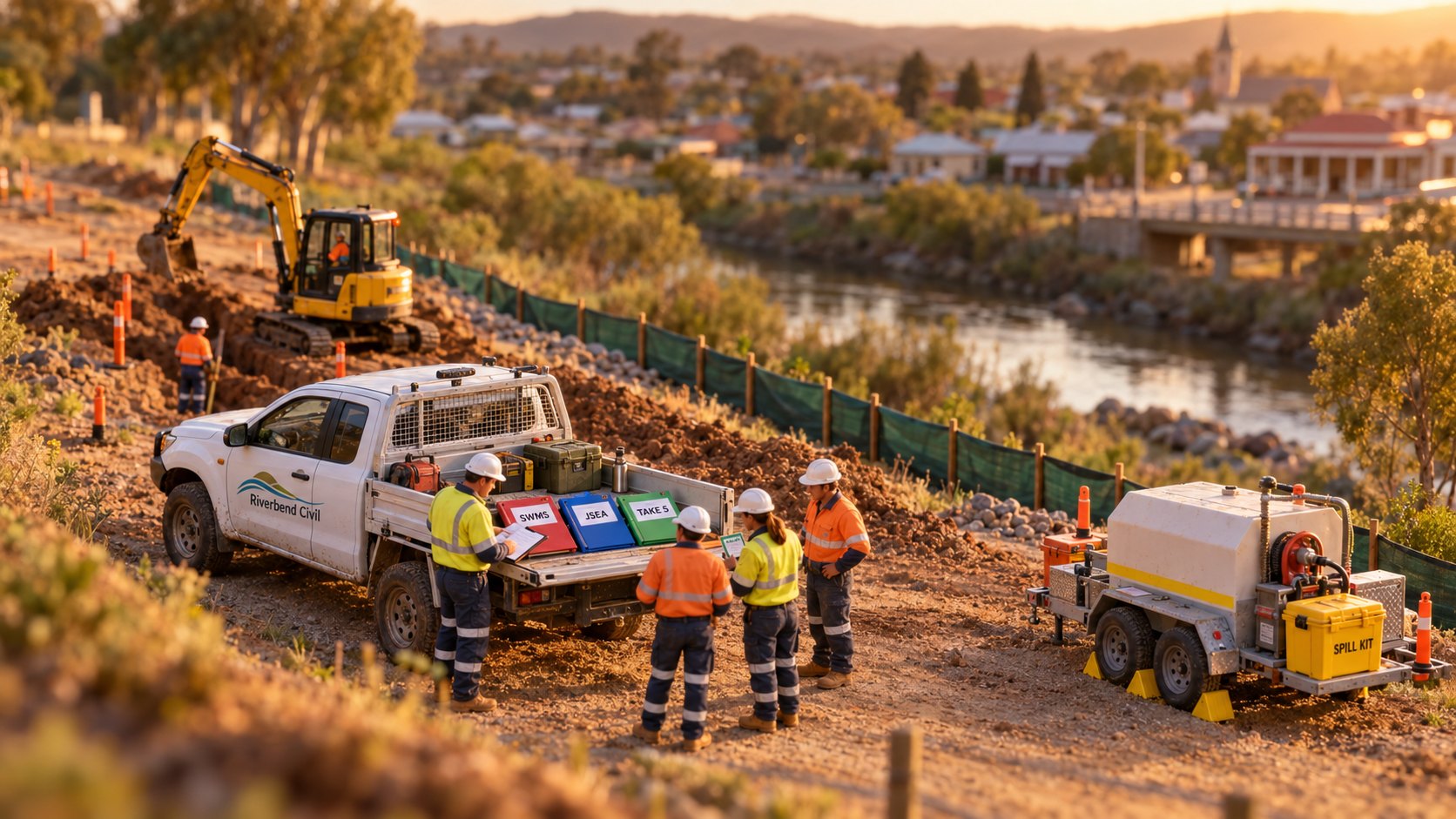
That is the gap critical control verification is designed to close. CCV checks, on site and at the task, whether the controls documented in the SWMS, and in supporting JSAs or Take 5s, are actually in place and working: the guardrail is installed, the harness is worn and anchored, the exclusion zone is set up. It is one thing to put it down on paper, and another to verify it is being followed.
Building CCV into your regular site inspections means every inspection tests the SWMS against what is happening on the ground, and when an inspector arrives, the SWMS is not just present but true. Our articles on the guard that was switched off and on workplace fatalities in 2025 explain how to set it up.
For how a SWMS relates to JSAs, JSEAs and Take 5s, and when each one is used, see our article on SWMS vs JSA vs JSEA vs Take 5.
Where this sits in ISO 45001
For organisations with an ISO 45001 safety management system, none of this needs a new process. It needs the existing ones to work on site.
What the regulations test
ISO 45001 clause
A SWMS prepared before high-risk work starts
8.1 Operational planning and control
Fall controls chosen from the top of the hierarchy
8.1.2 Eliminating hazards and reducing OH&S risks
Records available where the work is done
7.5 Documented information (control and availability)
Workers and HSRs able to see the SWMS
5.4 Consultation and participation of workers
Subcontractors’ SWMS checked
8.1.4 Procurement, including contractors
Controls in the SWMS verified as in place at the task
9.1 Monitoring, measurement, analysis and performance evaluation
Someone checking all of this on site
9.1 Monitoring and 9.2 Internal audit
The weak point we see most often is clause 7.5. The SWMS exists, but it lives in a system or a folder the crew never opens. Our analysis of 222 workplace deaths in 2025 found the same pattern across the country: the controls were known, but not in place where the work was happening.
Victoria is not a model WHS law state
Victoria has its own Occupational Health and Safety Act 2004 and OHS Regulations 2017, and has not adopted the national model WHS laws. The duty holder language is different (employers and self-employed persons, rather than a PCBU), but the SWMS requirement for high-risk construction work and the hierarchy of controls for falls are broadly consistent with the model laws. Businesses working across borders should expect the same documents to be checked in every state, even if only Victoria is fining on the spot. The national review of the model WHS laws published this month gives a sense of where the rest of the country is heading.
SWMS in Victoria: FAQs
When do the on-the-spot fines start?
31 March 2027, when the Occupational Health and Safety Amendment (Infringement Offences) Regulations 2026 commence.
Are there new safety duties?
No. WorkSafe says the changes add infringement enforcement for existing requirements, with some amendments to the existing SWMS and regulation 46 record-keeping requirements.
Who gets the fine if there are several duty holders on site?
The inspector decides, based on the evidence available. WorkSafe may act against more than one duty holder if the evidence shows more than one committed an offence.
Can an infringement notice be challenged?
Yes. A recipient can request an internal review or elect to have the matter heard in the Magistrates’ Court.
Does a SWMS have to be on paper?
No. WorkSafe’s examples include a printed copy in the crib room or a shared electronic folder with access instructions. What matters is that the people doing the work, HSRs and inspectors can access it readily for the duration of the work.
How Streamline can help
Streamline develops, implements and internally audits ISO 45001 safety management systems for Australian organisations, including SWMS and document control processes that work on site. The aim is a system that supports how your business operates and makes certification simple. A gap analysis before March 2027 will show where your sites stand, and ISO mentoring supports your own team to close the gaps. If you would like to talk it through, get in touch.
Published 24 October 2026 | Facts checked 24 October 2026 | Next review 31 March 2027 (commencement) or 1 July 2027 (penalty unit indexation) | Jurisdiction: Victoria | Source: OHS Amendment (Infringement Offences) Regulations 2026, WorkSafe Victoria
General guidance only. This article is general information, not legal, financial, safety or compliance advice, and it does not take account of your specific circumstances. Streamline ISO Consultants are ISO management-system consultants, not lawyers or licensed advisers. Standards, laws and regulator guidance change, and details were correct only at the time of writing. Always seek professional advice before acting. See our full Disclaimer.
Stay in the Loop
Get an email when we post an article. Your email address will not be used for marketing, and you can unsubscribe at any time.
Om nom nom... COOKIES! The essential ones keep our site working, and a few others help us see how it is used so we can make it better. Your call: accept the whole batch, keep it to essentials only, or pick your preferences. The full recipe is in our privacy policy.
Cookie Preferences
Manage your cookie preferences below:
Essential cookies enable basic functions and are necessary for the proper function of the website.
Name
Description
Duration
Cookie Preferences
This cookie is used to store the user's cookie consent preferences.
30 days
You can find more information in our Privacy Policy and .