AGL was fined $60,000 after five workers had elevated blood lead. They had a risk assessment and six items of PPE, and it missed the only route of entry that mattered.
Tag: #iso45001
There Is Now a Code of Practice for Elevating Work Platforms. Most Duty Holders Have Not Read It.

Scissor lifts and boom lifts have been ordinary equipment on Australian sites for decades, and for most of that time the guidance behind them was exactly that: two Safe Work Australia guides, carrying no particular legal weight. That changed quietly. In December 2025 Safe Work Australia published a model Code of Practice: Elevating work platforms, […]
Fined $230,000 for Someone Else’s Worker on Someone Else’s Plant
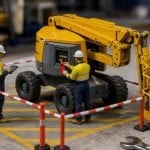
The short answer Contractor management is not a prequalification folder. Your WHS duty extends to people who are not your employees, and a contract saying otherwise does not discharge it. In August 2026 an Australian service company was convicted and fined $230,000 over a machine it did not own and a worker it did not […]
What Is a PCBU? The Duty Holder at the Centre of Australian WHS Law

Short answer. A PCBU is a person conducting a business or undertaking. It is the main duty holder under Australia’s work health and safety laws, and it replaced “employer” so that the duty follows the work rather than the employment contract. A PCBU is usually a company, but it can be a partnership, a sole […]
What Is a Principal Contractor? The WHS Duty You Hold Until You Hand It Over

Short answer. A principal contractor is the duty holder responsible for work health and safety across a construction project. In most of Australia the role attaches automatically to the business that commissions a project costing $250,000 or more, and it stays there unless that business appoints someone else and authorises them to have management or […]
The Energy Wheel and the Hierarchy of Controls: the Two Halves of a Risk Assessment
The short answer A risk assessment has a front end and a back end. The front end is hazard identification, and it is where most assessments quietly fail, because people can only assess the hazards they noticed. The energy wheel fixes that by asking what energy is present rather than what looks dangerous. The back […]
Your AI Rollout Is Now a Safety Question Too

Most organisations have filed artificial intelligence under governance. It sits with the privacy review, the procurement checklist and a policy about acceptable use. It is a technology decision with a compliance wrapper. Safe Work Australia has just made that filing incomplete. Its new guidance on AI and digital technologies treats these systems as something a […]
NSW Codes of Practice Are Now Enforceable: What the 1 July 2026 Duty Means for You

On 1 July 2026 a quiet but significant change took effect in New South Wales. Codes of practice, which for years sat in the background as “guidance”, became something much closer to law. If you run a business in NSW, the practical question has shifted from “have we had an incident?” to “can we show […]
SafeWork NSW Just Told You What It Will Inspect. Can You Prove It?

SafeWork NSW has published its four regulatory priorities for 2026-27. A regulator that publishes its priorities has effectively written your internal audit programme for you.