South Australia has laid its first industrial manslaughter charges. On 23 July 2026, following a SafeWork SA investigation and a referral to the Director of Public Prosecutions, charges were filed in the Adelaide Magistrates Court against Nylastex Tooling Pty Ltd, Nylastex Holdings Pty Ltd and two directors. A project manager employed by the company has separately been charged with a Category 1 offence under section 31 of the Work Health and Safety Act 2012.
The charges relate to the death of a 28-year-old worker at the company’s Edwardstown plant on 24 July 2024. The matter is before the court, SafeWork SA has said it cannot comment further, and everything that follows is an allegation yet to be tested.
A worker died. This article is about why controls that exist on paper stop working in practice, because that is the part other organisations can act on today. It is not a comment on the case itself, which is a matter for the court.
There is one date worth sitting with. Industrial manslaughter became a criminal offence in South Australia on 1 July 2024. The death occurred on 24 July 2024, twenty-three days later.
What is alleged
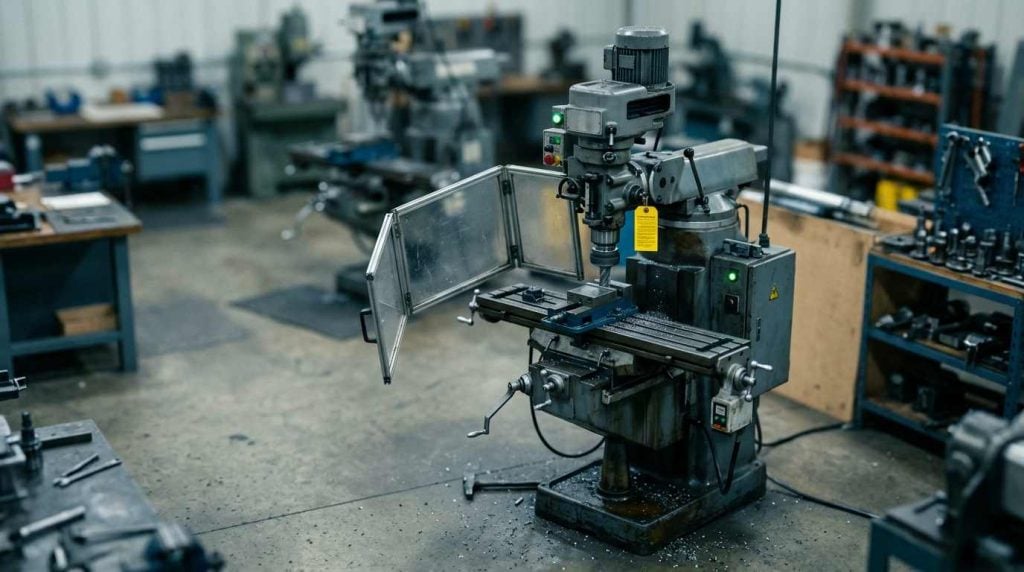
SafeWork SA alleges the worker was operating a milling machine when he was struck in the head by a metal object ejected from the machine. It further alleges that an interlock guarding switch, designed to prevent exactly that, had been disabled or bypassed.
Then there is the detail that should stop any safety manager mid-sentence. Two days before the death, an external technician engaged by the company allegedly advised that there were safety concerns with the guarding switch.
So on the allegations: the hazard was known and engineered against. The control was specified, purchased and fitted. A competent third party identified that it was not working and said so. And the machine kept running.
A guard can be fitted, listed on the risk register and visible in a photograph, and still not be working. Verification is the step that tells the two apart.
The failure was not the guard
It is tempting to read this as a machine guarding story. It is not, or not only.
The guard existed. Someone had done the risk assessment, selected an engineering control near the top of the hierarchy, and paid for a machine fitted with an interlock switch. On paper, that plant was compliant. An auditor reviewing the risk register would have found the hazard identified and the control documented. A photograph would have shown a guard in place.
The alleged failure sits in the gap between a control existing and a control working. Nobody, on these allegations, had a reliable way of knowing that the interlock was still doing its job. And when someone did find out, that information did not travel far enough or fast enough to stop the machine.
That gap has a name in ISO 45001, and it is where most systems are weakest.
What clause 9.2 is for
Clause 9.2 requires internal audit at planned intervals to determine whether the OH&S management system conforms to your own requirements and to the standard, and whether it is effectively implemented and maintained.
That last phrase carries the weight. Conformance is easy to demonstrate: you produce the document. Effectiveness has to be tested against reality.
An internal audit that samples the risk register and confirms a guard is listed has verified paperwork. An internal audit that goes to the machine, opens the guard and confirms the interlock actually stops it has verified the control. Those are different activities, and only the second one would have found what was allegedly wrong at Edwardstown.
The same logic applies to clause 8.1.2, which deals with eliminating hazards and reducing risks, and to clause 10.2, which deals with what happens when a nonconformity is raised. On the allegations, a nonconformity was raised verbally by a technician and appears not to have entered any system at all.
When the warning arrives in a service report
SafeWork SA reported a second South Australian matter on 5 August 2026. Schwarz Excavations and Civil Pty Ltd pleaded guilty under section 19 of the Work Health and Safety Act 2012 (SA) and was convicted and fined $140,000 in the South Australian Employment Court in July 2026, reduced from a $200,000 starting point by 30 per cent for the guilty plea and contrition.
On 20 September 2023 in the Adelaide Hills, a driver parked a prime mover and tipper on a slope without applying the park brake. The audible park brake warning did not sound, because the horn relay had been removed. The truck rolled through the site, down a paddock, across a road and through the wall of an industrial premises, partially demolishing a business. A worker moved clear in time, four businesses were damaged, and nobody was injured.
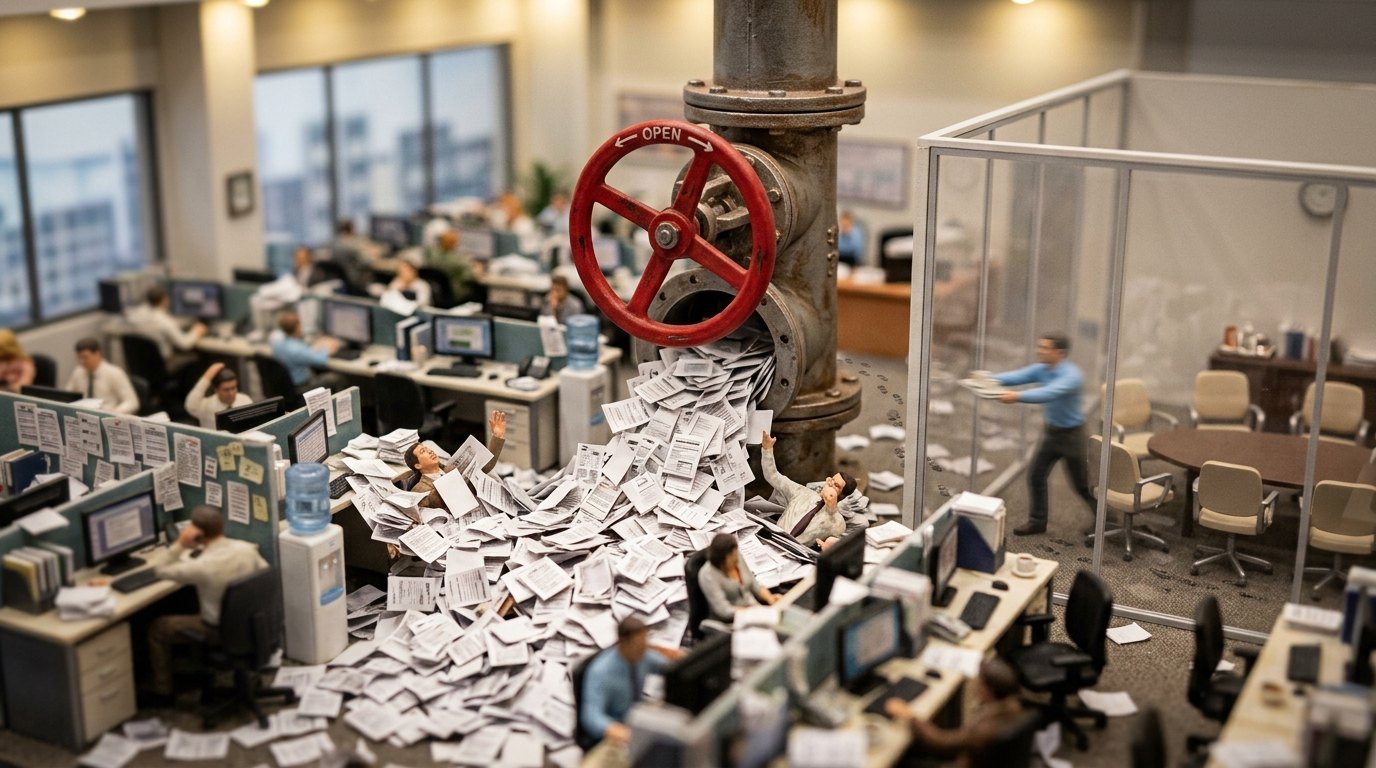
The disabled alarm had been identified in routine service reports in June and August 2023, both recommending further investigation, and the company did not act. Nobody defeated this control. It was correctly specified and correctly fitted. What failed was the loop that returns evidence about a control to someone who can act on it: an externally provided service produced two written findings, and there was no defined route for receiving, reviewing and closing them. Deputy President Lieschke found an “ad hoc approach” to obtaining maintenance reports had caused two separate warnings to be missed, and that the foreseeable harm “included multiple fatalities”.
Two routine service reports, in June and August 2023, recommended further investigation of the disabled park brake alarm. Neither was actioned. The company was fined $140,000.
That is clause 8.1 operational control reaching into 8.1.4, where externally provided processes still have to be controlled, clause 7.5.3 so documented information gets to the person who can act on it, and clause 10.2, because a finding with no closure is not a finding. Clause 9.2 is what samples it: the audit that opens the maintenance file and asks who read the last three reports. Most smaller organisations outsource plant servicing and treat the invoice as the record, when the report is the record and nobody owns the inbox it lands in.
As Deputy President Lieschke put it, “This offence is another example of a comprehensive written safety policy, good intentions and a strong commitment to safety falling short of practical compliance with the primary safety duty.”
Critical control verification, in practice
The discipline that addresses this is straightforward, and it is not new. For the small number of controls that stand between a worker and a fatality, you decide in advance:
Which controls are critical. Not every control. The ones where failure is plausible and the consequence is death or permanent injury. In a machine shop that is a short list, and interlocks are on it.
What “working” means, in terms someone can test. Not “guard fitted” but “guard open, machine will not run at hazardous speed”. A verification question has a pass or fail answer that does not depend on judgement.
Who verifies, how often, and with what evidence. A recorded check, on a schedule, by someone competent, producing something an auditor can sample twelve months later.
Where a failed verification goes. This is the step most systems skip. A verification regime that discovers a disabled interlock and has nowhere to send that finding is not a control, it is a filing exercise. The route from “this is not working” to “the machine is stopped” needs to be short, and it needs to work when the person raising it is a contractor rather than an employee.
That last point matters here. The technician was external. Plenty of systems handle internal reports well and have no route at all for a contractor’s verbal warning.
In a smaller business, the simplest vehicle for this is a leadership walk. Once a month, a manager walks the floor with a one-page form that lists the critical controls, tests each one against its pass or fail question, and records the result. That gives you the scheduled, recorded verification and visible leadership in a single routine. Many managers already do the walk. What is usually missing is the form, and without it there is nothing for an auditor to sample.
The same discipline works on construction sites and in yards. Safe Work Australia’s 2026 figures show vehicles, falls and falling objects caused almost two-thirds of worker deaths in 2025. Our article on building critical control verification into site safety inspections sets out two assessment criteria that test both the SWMS and what is happening on the ground.
The questions worth asking this week
Not about this case, which the court will deal with. About your own plant.
Can you name your critical controls, or do you have a risk register with several hundred entries and no hierarchy?
For each one, is there a verification activity with a date, an owner and a record, or is there an assumption?
When did someone last physically test an interlock rather than look at one?
If a contractor told your supervisor that a safety device was faulty this afternoon, where would that end up by tomorrow morning, and could you prove it?
Does your internal audit programme sample controls in the field, or does it sample documents in an office?
If the honest answer to the last one is documents, the audit is measuring the wrong thing. A system can be fully conformant and still have a switched-off guard on the floor.
The same court made the point again in August 2026, in a case where the risk assessment had been done and the controls still missed the hazard: five workers ended up with lead in their blood despite six items of PPE. As the judge put it there, risk assessment protocols are only as effective as the way in which they are implemented.
Where this fits
Independent internal auditing exists precisely to catch the distance between the system as written and the system as operating. That is difficult to do on your own work, because you tend to audit what you built and find what you expected. We do that work under clause 9.2, on site, as independent internal audits.
The charges in Adelaide will take their course. The question they raise for everyone else is simpler and more uncomfortable: you know your controls exist, but when did you last confirm they still work?
This article reports allegations in a matter currently before the courts, which have not been tested and are not findings of fact, alongside a separate concluded prosecution.
General guidance only. This article is general information, not legal, financial, safety or compliance advice, and it does not take account of your specific circumstances. Streamline ISO Consultants are ISO management-system consultants, not lawyers or licensed advisers. Standards, laws and regulator guidance change, and details were correct only at the time of writing. Always seek professional advice before acting. See our full Disclaimer.
Stay in the Loop
Get an email when we post an article. Your email address will not be used for marketing, and you can unsubscribe at any time.
Om nom nom... COOKIES! The essential ones keep our site working, and a few others help us see how it is used so we can make it better. Your call: accept the whole batch, keep it to essentials only, or pick your preferences. The full recipe is in our privacy policy.
Cookie Preferences
Manage your cookie preferences below:
Essential cookies enable basic functions and are necessary for the proper function of the website.
Name
Description
Duration
Cookie Preferences
This cookie is used to store the user's cookie consent preferences.
30 days
You can find more information in our Privacy Policy and .