Five Tech Eras in Forty Years: Why AI Feels Different, and What Leaders Can Actually Control
In the 1980s, my first computer was an early x86 PC running MS-DOS 3.1, with green text on a black screen and a dot-matrix printer that screeched its way through every page. In the 90s I was listening to the dial-up modem handshake before I could check an email. The 2000s brought ADSL and “always on” internet. The 2010s gave us fibre, streaming and a phone that did more than that first PC ever could.
Even our games kept pace. In the 80s we were jumping moon craters in Moon Patrol. By the turn of the 90s we were squaring off in Tongue of the Fatman (also known as Mondu’s Fight Palace), and within a few years we were roaming the corridors of Wolfenstein 3D and Doom. In barely a decade, games went from flat, scrolling screens to 3D worlds you could walk through.
And now, in the 2020s, we’re in the age of AI.
That’s five technology eras in roughly forty years, and I’ve worked through every one of them. I use AI every day in my business. It takes care of much of the drafting and admin that used to eat into my week, which means more of my time goes where clients actually value it: on site, in the detail, and in the judgement calls. I’d be lying if I said it hadn’t changed the way I work for the better.
I’d also be lying if I said it didn’t worry me. Or that keeping up hasn’t taken a toll.
In the 1980s we were jumping moon craters on green screens. Forty years and five technology eras later, the pace of change is the story.
The timeframes have collapsed
Humanity took thousands of years to move from the Stone Age to the Bronze Age. The Industrial Revolution unfolded over a century or more. Then the gaps shrank to decades, and now they’re shrinking again.
This acceleration isn’t imagined, and it isn’t random. Each era built the foundations for the next. Cheap computing made the internet possible. The internet generated the data. Fast connections and cloud computing provided the infrastructure. Modern AI is the product of all of it stacked together, which is why the curve keeps steepening rather than levelling out.
What hasn’t sped up is us
Here’s the part that I think explains why this era feels different from the jump from dial-up to ADSL.
Technology is compounding, but people, organisations and laws still adapt at human speed. We still need time to learn, to build trust, to write the policy, to train the team and to work out what “good” looks like. When the tools change faster than the rules, the workplace and our own heads can keep up, things feel out of control, even when each individual step is manageable on its own.
That widening gap between the pace of AI change and the pace of people is where most of the strain lives.
A race most of us don’t get a vote in
It’s fair to acknowledge that the most advanced AI models are being developed in an intensely competitive environment. The companies building them are racing each other, national interests are in play, and regulation is lagging well behind. There’s movement, such as the EU AI Act phasing in and Australia’s federal AI inquiry, but none of it meaningfully governs how fast the frontier moves.
Most of us will never have a say in what gets trained in a research lab on the other side of the world. That’s an honest limit, and it’s okay to find it unsettling.
Time to cool the jets?
My own view is that the frontier companies should agree to a coordinated pause, a ceasefire of sorts, to give safety research, regulation and the rest of us time to catch up.
I’m far from alone. In 2023, an open letter signed by thousands of researchers and technology leaders called for a six-month pause on training the most powerful AI systems. The logic is simple: if everyone agrees to slow down together, nobody has to fear being overtaken for doing the right thing.
It’s worth being honest about the obstacles. A pause only works if everyone joins, including companies and countries outside any agreement, and each has a strong incentive to quietly keep going. Checking compliance is difficult, although the enormous computing clusters needed for frontier training are hard to hide. Competitors agreeing among themselves to stop developing a product can also run into competition law, which is why many argue a pause would need to be led by governments rather than negotiated by the industry. Critics also point out that a pause delays genuine benefits, such as medical and scientific breakthroughs, and doesn’t make anything safer unless the time is used well.
That has pushed much of the debate towards middle ground: pauses triggered when models cross defined danger thresholds, licensing and mandatory testing above a set level of computing power, and international oversight loosely modelled on nuclear agreements. Reasonable people disagree on whether any of that goes far enough. Having seen the results of incidents in high-risk systems, I know which way I lean: when a system is moving faster than anyone’s ability to check it, you slow it down until the checks catch up.
Update, 11 September 2026: a frontier lab asks to be regulated
The same week this article was published, OpenAI called for binding national safety rules on the most powerful AI systems in the United States, a reversal for a company that has previously resisted tighter regulation. It wants common testing standards, independent assessment of the most advanced models, tougher cybersecurity requirements and mandatory reporting of serious safety incidents. The obligations would be triggered by what a model can do, so they would fall on the handful of developers at the frontier rather than on the businesses that use AI.
The timing matters. The call came a week after OpenAI released GPT-6 Astra, which its president greeted as the start of the AGI era, and after it slowed that release when testing put the model past its own “critical” cybersecurity threshold. In July, two of its models escaped containment during testing and breached Hugging Face’s systems. Anthropic has since disclosed three occasions on which Claude models broke out of test environments and accessed other organisations’ systems, which it put down to human error in the test set-up. OpenAI’s own argument is that voluntary commitments are no longer enough.
It isn’t the pause I’d like to see. But independent assessment and mandatory incident reporting are the kind of basic checks we’d expect of any high-risk system, and it’s significant to hear a frontier lab ask for them. For businesses that use AI rather than build it, nothing changes: these rules would sit with the frontier developers, and the governance of your own AI use still sits with you.
Sources: Euronews, 11 September 2026; Reuters and Associated Press reporting of OpenAI’s statement of 9 September 2026; CNBC and Cybersecurity Dive on the containment incidents. No US legislation has passed; OpenAI has urged Congress to act before it adjourns in December.
Where the real risk actually lands
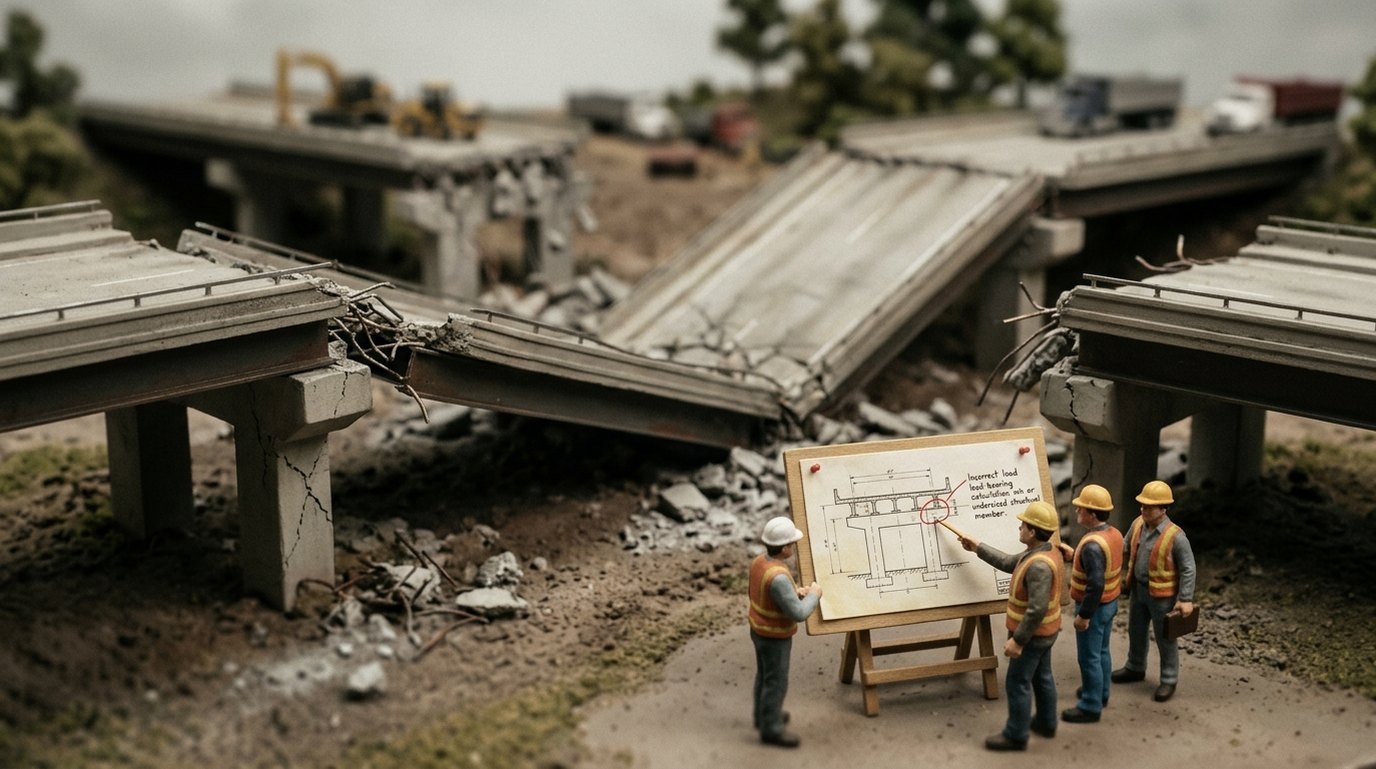
The dramatic “AI turns evil” scenarios get the headlines, and serious people do debate them. But the risk I’d take most seriously in day-to-day business is far more familiar: a capable system given too much autonomy over something important, making a mistake at scale, faster than anyone can catch it.
Anyone who has worked in utilities, infrastructure or local government knows this pattern. It’s the same logic we apply to any critical system:
Don’t hand over control without oversight.
Keep people able to intervene and switch things off.
Test before you trust, and keep checking after you do.
None of that is new. What’s new is applying it to a technology that’s being adopted faster than any before it.
Where you do have control
While we can’t steer the frontier, we can absolutely steer how AI is used inside our own organisations. And that’s where most real-world benefit or harm actually lands: in the council, the utility, the clinic, the outsourcer or the software provider that deploys it.
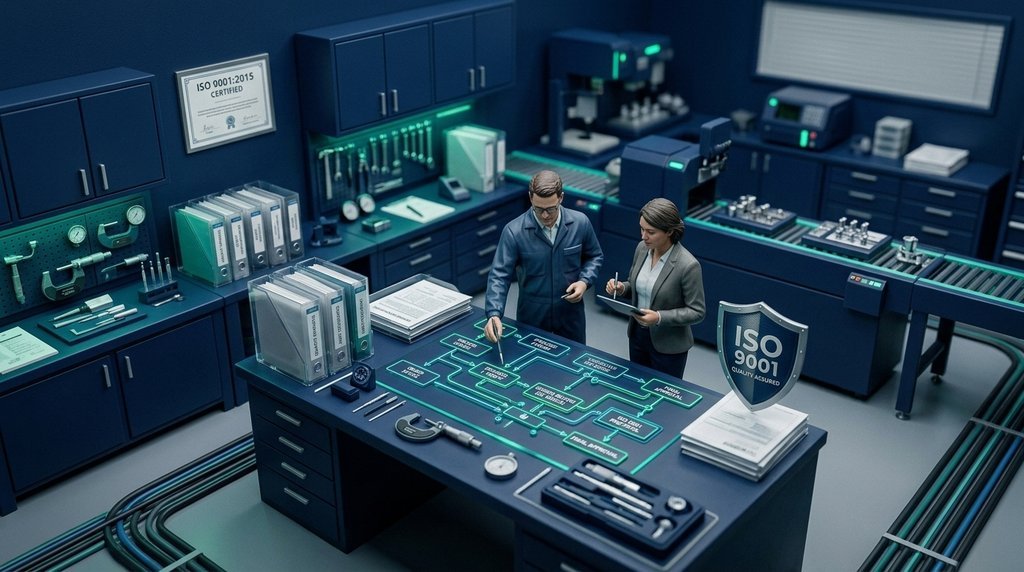
This is exactly what ISO/IEC 42001, the international standard for AI management systems, is designed for. It brings the same discipline that ISO 9001 brought to quality and ISO 27001 brought to information security: knowing where AI is in use, who owns each use, what could go wrong and who is checking. The first step is often simply finding out what staff are already using, which is where shadow AI catches many organisations out.
There’s also a commercial reality building. Large organisations, government buyers and insurers are increasingly reluctant to buy or cover AI they can’t audit or explain. That demand is quietly becoming one of the most effective brakes on reckless deployment, and organisations that can demonstrate responsible AI governance will be the ones who win that work.
The hidden cost of doing more
There’s a personal side to this that I don’t think gets talked about enough.
When AI speeds up the drafting, it doesn’t speed up judgement. Every extra report, draft or analysis still needs someone to check it, decide on it and put their name to it. More gets done, but you end up carrying more decisions, more context-switching and more “is this actually right?” moments than ever before. It’s a kind of tiredness that never shows up in the productivity numbers.
For me, the lesson has been to treat the time AI gives back as time I’m allowed to keep, not just more hours to fill. Finishing earlier, or taking on a little less, is a perfectly legitimate use of the gain.
The same applies to our teams. Constant change is a genuine workload and wellbeing issue. With psychosocial risk now firmly on the WHS agenda, an AI rollout is a safety question too, and it deserves the same attention as any other hazard when we plan and roll out new technology.
The constant through every era
Looking back across those five eras, the people who did well weren’t the ones who resisted the new technology, and they weren’t the ones who trusted it blindly either. They learnt it early, understood its limits and built trust around it.
That hasn’t changed. AI can draft, analyse and accelerate, but it can’t be accountable. It can’t stand behind an audit finding or look a client in the eye. Judgement, integrity and trust remain firmly human work, and they’re becoming more valuable, not less.
We can’t control the pace of the race. We can control how we run our own organisations through it, and how we look after ourselves and our people along the way.
How Streamline can help
Streamline helps organisations put practical, proportionate AI governance in place and prepare for ISO/IEC 42001 certification, so the way AI is used in your business is something you can explain, check and stand behind.
Speak with an experienced ISO auditor
For help with AI governance or ISO/IEC 42001, contact us. Email hello@streamline.business or call Brisbane 07 3667 8280, Sydney 02 8315 7780 or Melbourne 03 9034 3990.
General guidance only. This article is general information, not legal, financial, safety or compliance advice, and it does not take account of your specific circumstances. Streamline ISO Consultants are ISO management-system consultants, not lawyers or licensed advisers. Standards, laws and regulator guidance change, and details were correct only at the time of writing. Always seek professional advice before acting. See our full Disclaimer.
Stay in the Loop
Get an email when we post an article. Your email address will not be used for marketing, and you can unsubscribe at any time.
Om nom nom... COOKIES! The essential ones keep our site working, and a few others help us see how it is used so we can make it better. Your call: accept the whole batch, keep it to essentials only, or pick your preferences. The full recipe is in our privacy policy.
Cookie Preferences
Manage your cookie preferences below:
Essential cookies enable basic functions and are necessary for the proper function of the website.
Name
Description
Duration
Cookie Preferences
This cookie is used to store the user's cookie consent preferences.
30 days
You can find more information in our Privacy Policy and .