ACRS Certification Support: ISO 9001 and ACRS Together
The short answer
ACRS is the specialist certification body for reinforcing and structural steel in Australia and New Zealand. It is accredited by JAS-ANZ and runs product certification against standards such as AS/NZS 4671, along with traceability, sustainability and ISO 9001 quality management system certification.
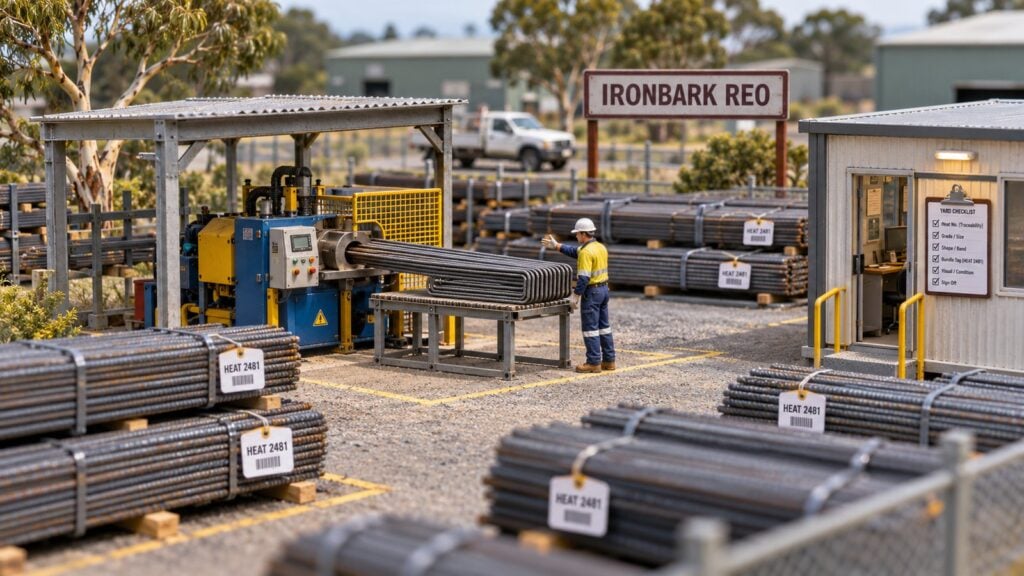
Processors and fabricators, including cut and bend shops and mesh makers, hold their own certificates for the steel they process. ACRS evaluates their quality system, takes samples for independent testing, and requires test results every quarter.
Streamline builds the ISO 9001 quality management system and the ACRS scheme requirements as one system, so both can be audited together. ACRS makes the certification decision; we get the business ready for it.
Reviewed November 2026. Checked against ACRS scheme documents and state road authority specifications.
Product certification for steel made or processed to Australian and New Zealand standards, including AS/NZS 4671 reinforcing bar, coil and mesh, AS/NZS 4672 prestressing steel, AS/NZS 3678 and 3679 structural steel, and AS/NZS 1163 hollow sections.
Traceability certification for processors, fabricators, distributors and importers handling ACRS-approved steel.
Sustainable Constructional Steel (SCS) certification for sustainably produced steel.
Quality management system certification to ISO 9001 for holders of, or applicants for, ACRS product certification.
Product certification uses what ACRS calls a book-end approach. The mill that made the steel holds a producer certificate, and the business that cuts, bends, welds or fabricates it holds its own certificate. Both have to be current for the finished product to count as ACRS certified, and buyers can check either one on the public register of certificate holders.
Who needs it
ACRS certificates sit with three groups:
Producers: steel mills making certified product from raw materials.
Processors and fabricators: cut and bend operations, welded mesh makers, and fabricators of reinforcing and structural steel.
Distributors and traders: stockists, service centres and importers handling certified steel without transforming it. They can apply for traceability and ISO 9001 certification, but not product certification.
Much of the demand comes from project specifications. The Queensland Department of Transport and Main Roads MRTS71 Reinforcing Steel (July 2025) requires producers and processors to be third-party certified under a JAS-ANZ accredited scheme and names ACRS as acceptable. The South Australian Department for Infrastructure and Transport steel reinforcement specification requires manufacturers and processors to hold a valid ACRS certificate of approval, as a hold point. Principal contractors often carry the same requirement down to their reinforcing suppliers.
What ACRS looks at
ACRS product certification runs on a three-year assessment cycle with annual certificate renewal: a full evaluation in year one, then surveillance evaluations in years two and three. Assessors work from the ACRS Product Certification Scheme Rules (ADM 002, currently version 12.2) and the List of Applicable Product Requirements (ADM 002-01, version 2.8). For a processor or fabricator, the evaluation covers:
An unbroken chain of certification. All steel comes from mills and suppliers holding current ACRS certificates for that product, the paperwork shows an unbroken chain of certification for everything supplied, and any non-approved material is clearly identified and kept separate.
Processing and handling. Cutting, bending, welding and coupling are done correctly and to the standard.
Traceability. Each item can be traced back through processing to the mill certificate, with correct marking and paperwork at dispatch.
The quality system. ACRS evaluates it against ISO 9001, although product certification on its own is not an ISO 9001 certificate.
Independent testing. Assessors take samples for testing at independent laboratories and analyse the results statistically against the standard.
All materials, all locations. A business cannot certify some similar products at a site and leave others out, or make certified product at an uncertified site.
Use of the ACRS Mark. Only a certified firm with an issued certificate can use the Mark, and only on Approved Materials, with the certificate number shown on the tag. It cannot be used on product transformed anywhere other than a certified location.
Change notification. New or relocated plant and testing facilities, changes of key personnel, new or closed locations and changes of ownership have to be reported to ACRS in writing.
After certification, quarterly test reporting becomes a fixed part of the year. Results for all certified materials at each location are due by 28 January, 28 April, 28 July and 28 October, with a zero declaration when nothing was produced, which also means resubmitting the previous quarter’s test data unchanged. Late or incomplete reporting is raised as a nonconformance, and repeated failures can lead to suspension.
Doing ISO 9001 and ACRS together
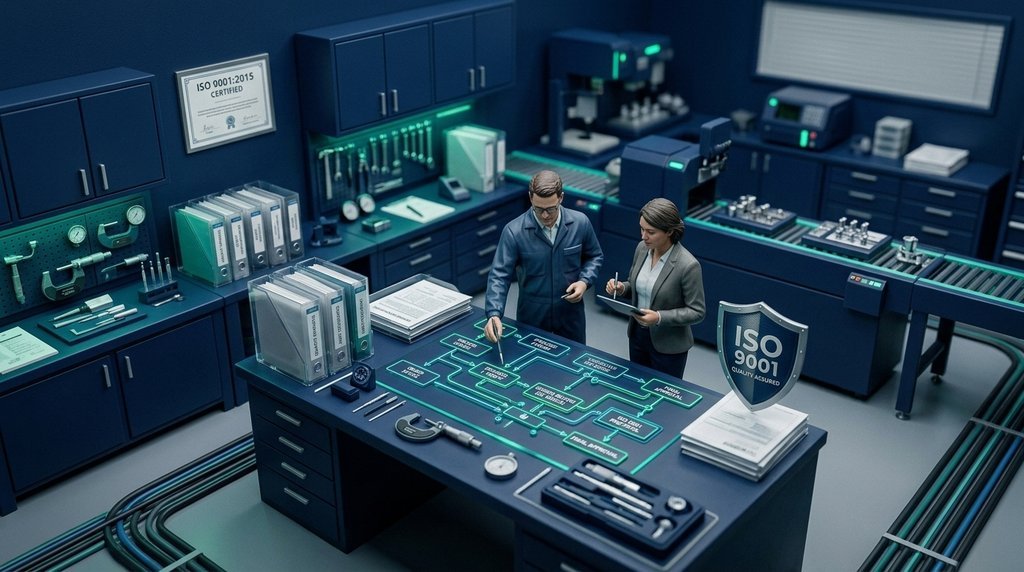
Many processors take on ISO 9001 and ACRS at the same time, and it makes sense. ACRS offers ISO 9001 certification alongside product certification, and combining the two saves time on site. The two are also linked: under the ACRS scheme rules, if a site’s product certification is suspended or terminated, its ISO 9001 certification follows.
Built as one system, the same processes serve both audits:
ACRS expects
Where it sits in ISO 9001
Steel bought only from approved, certified mills
8.4 control of externally provided products (supplier approval and checking mill certificates on receipt)
Traceability from mill certificate to dispatch
8.5.2 identification and traceability
Correct cutting, bending and welding
8.5.1 control of production, with work instructions and competent operators (7.2)
Calibrated bending, measuring and test equipment
7.1.5 monitoring and measuring resources
Nonconformances and corrective action requests closed out
8.7 nonconforming outputs and 10.2 corrective action
Quarterly test reporting on time, every quarter
9.1 monitoring and measurement, with a named owner and a scheduled reminder
Evidence the system works between ACRS visits
9.2 internal audit and 9.3 management review
Competence is checked the same way. ACRS does not publish its own operator competency requirements; the assessor tests it through clause 7.2, asking who operates the machines and how the business knows they are competent. Where reinforcement is welded, welder qualification follows AS/NZS 1554.3.
Traceability is usually the hardest part to get right, especially when steel is cut from several heats into one order. Two other failure points come up again and again in cut and bend shops: part-used coils, offcuts and remnants going back to stock without a tag, and the heat number not carrying through to the item when the processing tag is scanned. The most reliable systems build it into the business software the yard already uses for stock and production, so the record is created as the work is done, not reconstructed before an audit.
Free download: ISO 9001 and ACRS requirements matrix
An Excel matrix that lines up each ISO 9001 clause with what ACRS looks for, with evidence prompts and columns for where it sits in your system, the owner and the status. Use it to plan the build and as a checklist before each ACRS evaluation. Free, no email required.
Gap analysis against ISO 9001 and the ACRS scheme requirements, so you know what already exists before committing budget. See gap analysis audits.
System development. Quality manual, procedures, registers and process flowcharts built around how your yard actually runs, including supplier approval, traceability, calibration and quarterly reporting.
Internal audit and readiness review under ISO 9001 clause 9.2 before the ACRS evaluation, so findings are closed out in advance. See internal auditing.
Management review and support through the ACRS evaluation and corrective action responses.
Mentoring for businesses that want a capable staff member to build and run the system with our guidance. See ISO mentoring.
We are currently building a combined ISO 9001 and ACRS system for a reinforcing steel processor, with raw material traceability designed into their business software from the start.
Common questions
Is ACRS certification the same as ISO 9001?
No. ACRS product certification checks that the steel you supply conforms to the relevant AS/NZS standard, through site evaluations, independent sampling and testing, and quarterly test reporting. ISO 9001 certifies the quality management system. ACRS evaluates your quality system as part of product certification, and it also offers ISO 9001 certification as a separate scheme, so the two can be audited together.
Can we keep our current certification body for ISO 9001?
Yes. ACRS says product certificate holders that already hold ISO 9001 from another certifier can still combine the two schemes with ACRS. Combining them means less time on site, but it is a choice rather than a requirement.
Who needs ACRS certification?
Steel mills hold producer certificates. Processors that cut and bend reinforcing bar or coil, fabricators of welded mesh and structural sections, and distributors handling certified steel hold processing, fabricating or traceability certificates. Many projects require it: Queensland TMR and the South Australian Department for Infrastructure and Transport both name ACRS in their reinforcing steel specifications.
What does ACRS certification cost?
ACRS sets out its fees on its application form. Assessment fees are paid in advance, an annual fee applies to each certificate, and testing beyond one grade from one process is invoiced separately. Consulting support for the quality system is a separate cost, which depends on how much of your system already exists.
How long does it take to get ready for ACRS?
It depends on your starting point. A processor with good mill certificate records, stock control and test data can be ready much sooner than one starting from scratch. We set out a project plan with dates at the start, so the ACRS evaluation can be booked against real milestones.
What happens if we miss a quarterly test report?
ACRS requires test results for all certified materials every three months for each location, including a zero declaration if nothing was produced, with the previous quarter’s test data resubmitted unchanged. Late or incomplete reports are raised as a nonconformance, and repeated or missed reporting can lead to suspension.
Where Streamline fits
Streamline is an ISO consultancy. ACRS is the accredited certification body that evaluates, tests and certifies. We develop, implement and internally audit the quality system that ACRS evaluates, and our experienced Lead Auditors work directly with your team from the first conversation to the certification audit. For the ISO 9001 side on its own, see our ISO 9001 consulting page.
Talk to an ISO Lead Auditor
If a project specification or a principal contractor has asked for ACRS certification, email hello@streamline.business or book a free consultation.
Om nom nom... COOKIES! The essential ones keep our site working, and a few others help us see how it is used so we can make it better. Your call: accept the whole batch, keep it to essentials only, or pick your preferences. The full recipe is in our privacy policy.
Cookie Preferences
Manage your cookie preferences below:
Essential cookies enable basic functions and are necessary for the proper function of the website.
Name
Description
Duration
Cookie Preferences
This cookie is used to store the user's cookie consent preferences.
30 days
You can find more information in our Privacy Policy and .