ISO 17025 Option A vs Option B: Which Management System Route?
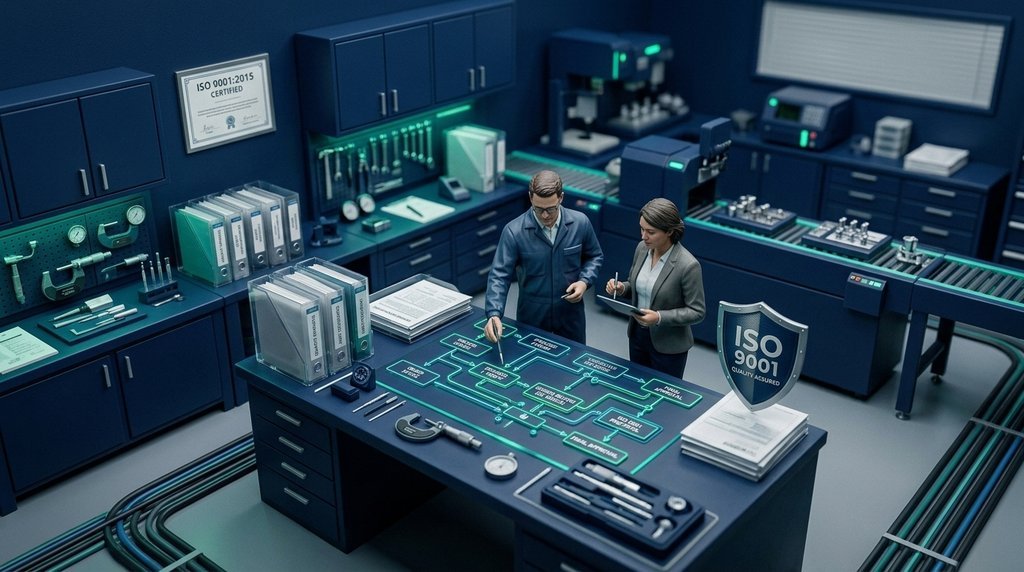
Under Option B, the laboratory runs on the same ISO 9001 system as the rest of the business.
Clause 8 of ISO/IEC 17025 gives laboratories a choice in how they meet the management system requirements: Option A or Option B. It is one of the first decisions in an accreditation project, and the right answer depends mostly on one thing: whether the organisation already runs ISO 9001.
Short answer
Option A (clause 8.1.2) means the laboratory meets the management system requirements in clauses 8.2 to 8.9 directly. Option B (clause 8.1.3) means the laboratory uses a management system established in accordance with ISO 9001, as long as it supports clauses 4 to 7 and meets at least the intent of 8.2 to 8.9. Either way, the technical requirements in clauses 4 to 7 are identical. Laboratories that already hold ISO 9001 almost always choose Option B.
Option A and Option B side by side
Option A
Option B
Clause
8.1.2
8.1.3
What it requires
A management system that meets clauses 8.2 to 8.9 directly.
A management system in accordance with ISO 9001 that supports clauses 4 to 7 and meets at least the intent of 8.2 to 8.9.
Best suited to
Standalone laboratories without ISO 9001, or laboratories within an organisation that does not run ISO 9001.
Laboratories in organisations that already hold, or are building, ISO 9001.
Number of systems
One, built around ISO/IEC 17025.
One, built around ISO 9001 and extended for the laboratory.
Technical requirements
Clauses 4 to 7 in full.
Clauses 4 to 7 in full.
What clauses 8.2 to 8.9 cover
8.2 Management system documentation, including policies and objectives
8.3 Control of management system documents
8.4 Control of records
8.5 Actions to address risks and opportunities
8.6 Improvement
8.7 Corrective action
8.8 Internal audits
8.9 Management reviews
Anyone who has worked with ISO 9001 will recognise every item on that list. That is the point of Option B: an ISO 9001 system already does all of this, so the laboratory does not need a second set of procedures for the same things.
Why our clients have always chosen Option B
Every laboratory client we have taken towards NATA accreditation has chosen Option B. In each case, accreditation was an extension of an existing ISO 9001 certification: the quality system was already running, certified and audited, and the laboratory work was the part that needed building. Choosing Option A in that situation would have meant a parallel system for document control, records, corrective action, internal audit and management review, maintained alongside the ISO 9001 versions of exactly the same things.
Making Option B work
Option B is not a shortcut around clause 8. The ISO 9001 system has to genuinely support the laboratory’s technical work, and NATA will assess it on that basis. The areas that need attention are:
Scope. Make sure the ISO 9001 system covers the laboratory activities, not just the wider business. Our guide to clause 4.3 scope covers how to draw the boundary.
Internal audit. Audit the laboratory against ISO/IEC 17025 clauses 4 to 7 as well as ISO 9001, with auditors who understand both.
Management review. Add the laboratory inputs ISO/IEC 17025 expects, such as the results of proficiency testing and other checks on the validity of results, changes in workload, and the outcomes of external assessments.
Corrective action. Use one process for nonconformities from NATA assessments, ISO 9001 audits, complaints and nonconforming work.
Documents and records. Bring technical records, method documents and equipment records under the same control as the rest of the system.
Two external audits. The certification body audits ISO 9001; NATA assesses ISO/IEC 17025. Plan them so the evidence serves both.
With ISO 9001:2026 now published, laboratories using Option B will transition their quality system over the coming years. The ISO 9001:2026 changes article covers what that involves. An integrated management system approach keeps it all in one place.
How Streamline helps
We extend existing ISO 9001 systems to cover ISO/IEC 17025 under Option B, so the laboratory runs one system rather than two. Accreditation itself is granted by NATA; our role is getting the laboratory ready for assessment and keeping the system working afterwards. Read about our ISO 17025 consulting, or talk to us about your laboratory.
Option B (clause 8.1.3) allows a laboratory that has a management system established and maintained in accordance with ISO 9001 to use that system, provided it supports and demonstrates consistent fulfilment of clauses 4 to 7 of ISO/IEC 17025 and fulfils at least the intent of clauses 8.2 to 8.9.
Does Option B require ISO 9001 certification?
No. Option B requires a management system in accordance with ISO 9001, not a certificate. In practice, most laboratories using Option B are already ISO 9001 certified, but certification alone does not meet the requirement; the system still has to cover the laboratory’s technical activities.
Is Option A or Option B easier for NATA?
Neither is easier for the assessment itself. NATA assesses the management system either way. Option B is usually easier to run when the organisation already holds ISO 9001, because there is one system rather than two.
Can we change from Option A to Option B later?
Yes. A laboratory that later implements ISO 9001 can move to Option B. The change should be planned, documented and discussed with NATA so the assessment reflects how the system now works.
General guidance only. This article is general information, not legal, financial, safety or compliance advice, and it does not take account of your specific circumstances. Streamline ISO Consultants are ISO management-system consultants, not lawyers or licensed advisers. Standards, laws and regulator guidance change, and details were correct only at the time of writing. Always seek professional advice before acting. See our full Disclaimer.
Stay in the Loop
Get an email when we post an article. Your email address will not be used for marketing, and you can unsubscribe at any time.
Om nom nom... COOKIES! The essential ones keep our site working, and a few others help us see how it is used so we can make it better. Your call: accept the whole batch, keep it to essentials only, or pick your preferences. The full recipe is in our privacy policy.
Cookie Preferences
Manage your cookie preferences below:
Essential cookies enable basic functions and are necessary for the proper function of the website.
Name
Description
Duration
Cookie Preferences
This cookie is used to store the user's cookie consent preferences.
30 days
You can find more information in our Privacy Policy and .